
For budget backpackers, overnight trains are always a bit of a double win. You save yourself a night’s accommodation, and you move on to your next destination while you sleep. In theory, it sounds perfect. In reality, it usually means arriving somewhere new slightly delirious, running on snacks and questionable sleep, wondering if it was actually worth it.
The Tbilisi to Yerevan train is not completely an exception to that rule – you will still be tired but it does manage to soften the blow. Thanks to the timing of the border crossings and relatively decent sleeping conditions, you’ll probably arrive in better shape than you expect. More than that, it’s an experience in its own right: part transport, part time capsule.
This guide covers everything you’ll want to know before you hop on board.
Journey time and schedule
The trip takes roughly eleven hours in total, although border delays can shift that slightly. The train departs from Tbilisi Central Station at 20:20 and rolls into Yerevan around 07:00 the following morning. It’s an overnight run that feels surprisingly efficient once you’re actually on it.
Sleeping arrangements
Your experience depends entirely on your ticket. First class offers private two-bed cabins, second class has four berths in a compartment, and third class is an open-plan sleeper carriage with rows of bunks.
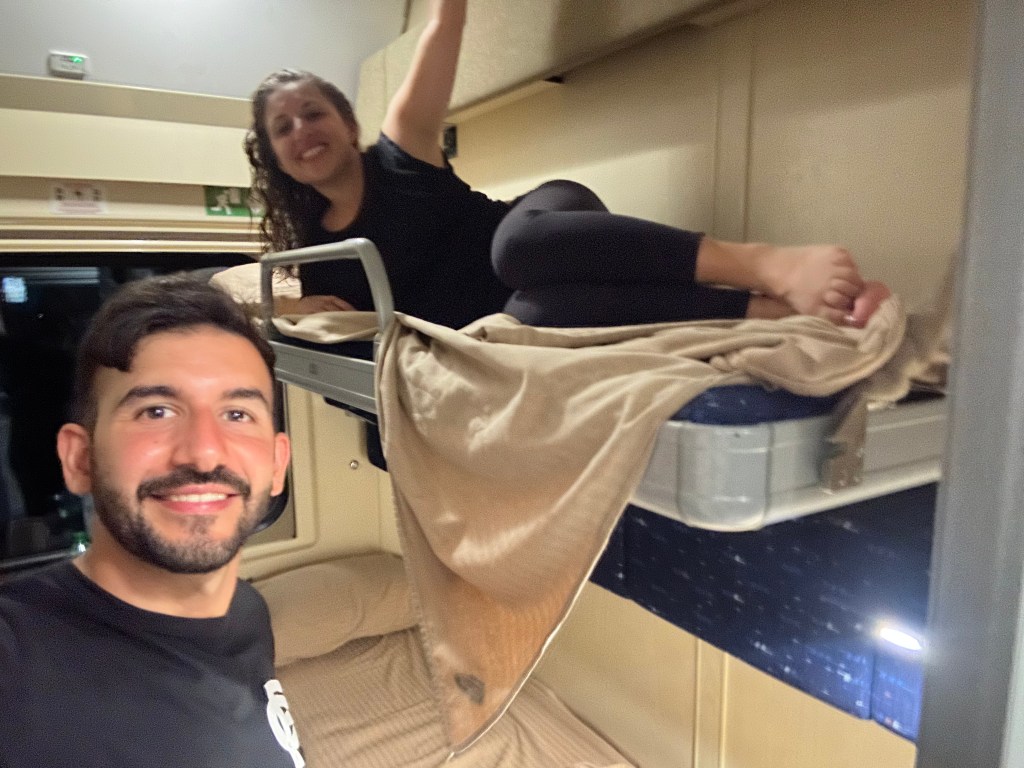
We travelled in second class, and it was honestly better than expected. We shared the cabin with a solo female traveller who looked just as unsure about the whole thing as we felt. There was a brief moment of dark humour where we all joked about whether we’d wake up in one piece, but it quickly became obvious that the nerves were far worse than anything else about the experience. In reality, it felt safe and completely uneventful in the best possible way.
Each passenger was given a sheet, pillow, and pillowcase, and the bunks themselves were more comfortable than we’d anticipated. It was simple, no-frills travel, but it did exactly what it needed to—give us a decent night’s sleep as we rolled across the border.
Facilities onboard
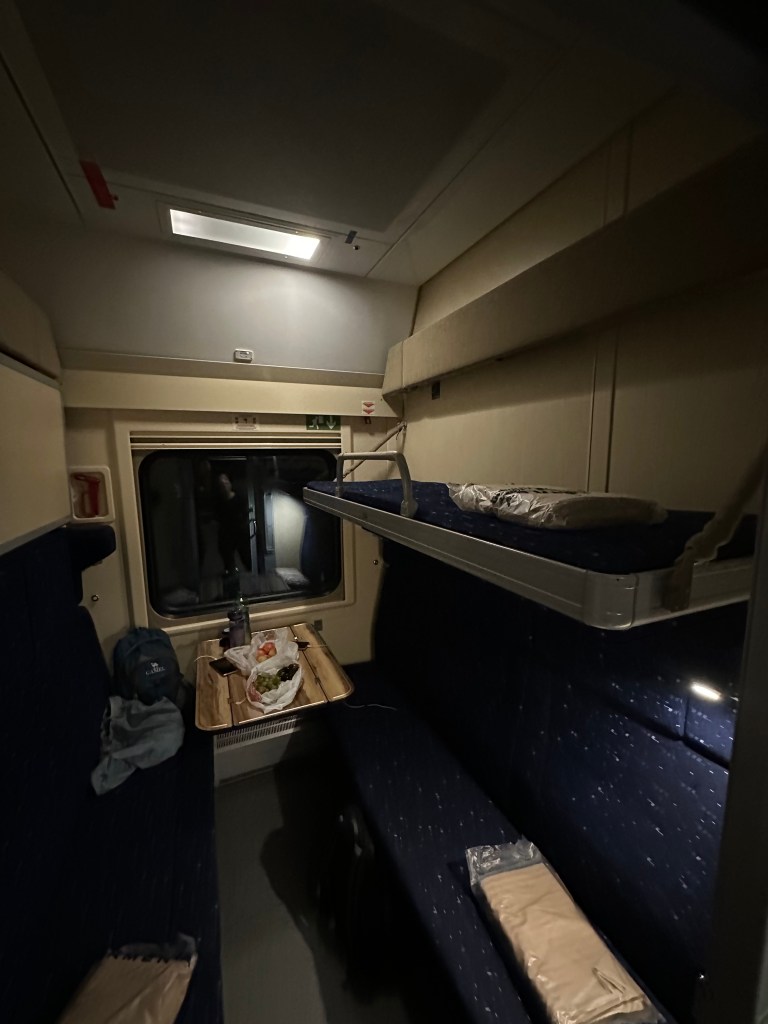
Facilities are minimal but functional. There are toilets on board, and there’s even a shower mentioned (we didn’t test it). There is no food service at all, so you need to stock up in Tbilisi before boarding. Snacks, dinner, breakfast – bring everything you’ll need.
There is a hot water and drinking water dispenser, which helps, and plenty of people bring kettles or tea supplies to make the journey more comfortable. Power outlets are available at each bunk, along with reading lights, hooks for jackets, and small storage pockets for valuables.
Luggage space is split between bunks: lower berths have storage underneath, while upper berths store bags overhead. If you’re travelling heavy, lower bunks are definitely more convenient.
Tickets and how to buy them
We bought our tickets directly at Tbilisi Central Station after struggling to navigate the online system. Head to the top floor, take a ticket from the machine, and wait your turn – even if the counter looks empty, you’re still expected to do it properly.
Bring cash and your passport. There’s an ATM downstairs, but it charges a fairly hefty fee, so it’s better to withdraw money in town beforehand.
While it’s technically possible to buy tickets on the day, it’s safer to book a few days in advance, especially in peak season. More recently, tickets can also be booked via the South Caucasus Railway website, although experiences with it seem mixed.
Ticket classes explained
There are three options:
- First class (spalny vagon) offers private two-person cabins.
- Second class (kupe) is a four-berth compartment.
- Third class (platskartny) is the open sleeper carriage we used, with bunks arranged in an open-plan layout rather than enclosed cabins.
What the train is actually like
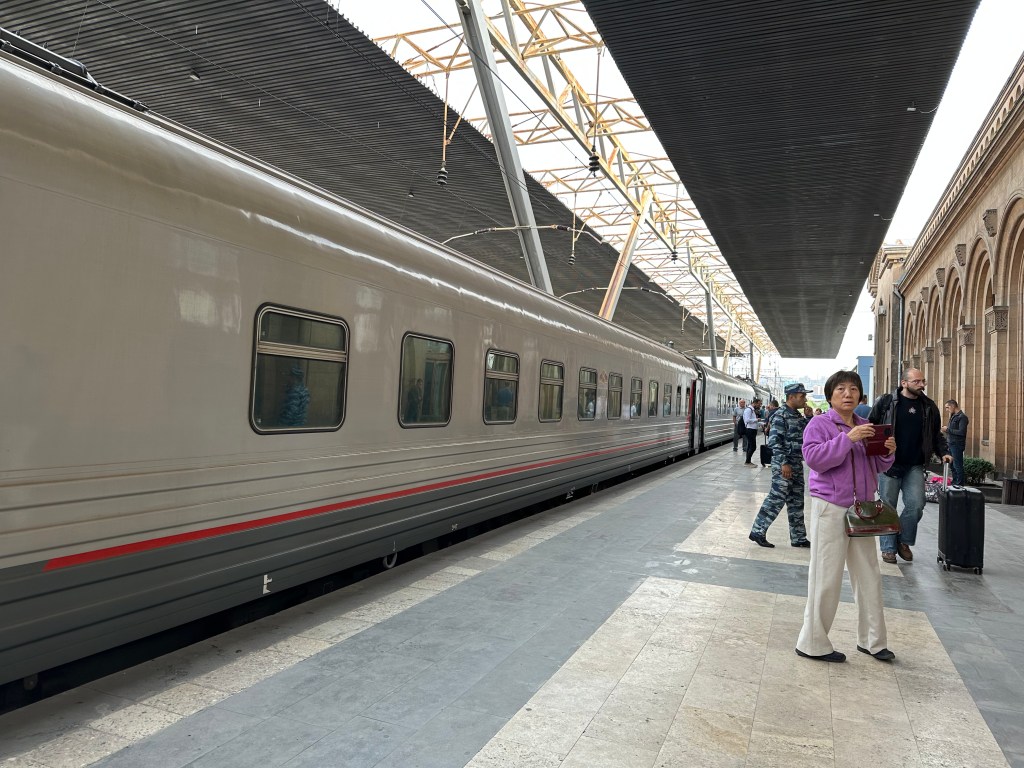
The old Soviet-era carriages have now been replaced with newer Russian-built ones. They’re not luxury by any stretch, but they’re clean and comfortable enough for an overnight journey.
Inside, things feel fairly modern – blue and green plastic interiors, simple fittings, and reasonably padded beds. When you board, the bunks are folded into seats, and later in the evening the steward distributes sealed bedding packs so you can make your bed.
It’s functional, slightly nostalgic, and very much “get you from A to B” travel rather than anything glamorous.
Border crossings
The Georgian border is usually reached around 22:00. Everyone disembarks, queues for passport control, gets stamped, and then reboards the train. After that, officials walk through to double-check everything. The whole process takes around an hour to an hour and a half.
The Armenian border check happened just after 00:30, when border officials boarded the train and started moving through the carriages with handheld scanners. When they reached Khaled and me, things immediately became a bit more “interesting” than for everyone else. They spotted our Azerbaijan stamps and suddenly we weren’t just two sleepy passengers on an overnight train – we were apparently a full case study. What followed was a long series of questions about where we had been, why we had been there and where we were going.
At one point we were asked for our home towns, which somehow escalated into phone calls being made to verify details, all while we sat there pretending this was a completely normal part of a night train experience and not the most bureaucratic interrogation of our lives at 1am.
To be fair, it never felt aggressive – just very thorough, slightly confused, and extremely serious about something we were trying to explain half-awake in broken sentences. Meanwhile, the rest of the carriage was quietly being stamped and waved through in seconds, so we had the added bonus of feeling like we’d accidentally joined the “extra paperwork” group.
Eventually, after what felt like a full shift change in border control staff, our passports were stamped and returned to us. A few muttered comments later, the officers moved on down the train, and we were left sitting there slightly amused, slightly relieved, and very aware that we had somehow made it through Armenia’s most low-key interrogation booth on rails.
Gyumri stop
After crossing into Armenia, the train continues towards Yerevan via Gyumri. There’s a brief stop around 03:00, although most passengers stay onboard.
Arrival into Yerevan
The final stretch is smooth and quiet, and you’ll arrive into Yerevan around 07:00. If you manage to sleep well, you can get a solid five hours or so of rest before the day begins.
Overall, the journey is surprisingly painless. The train runs on time, the beds are decent enough, and the border crossings are smoother than you might expect.
Still, it’s a memorable way to travel between Georgia and Armenia. It’s more comfortable than a marshrutka, more interesting than a flight, and has just enough quirks to make it feel like a proper travel experience rather than just transport.
What to pack
Since there’s no food carriage, you’ll need to bring everything with you for the night. Snacks, water, and breakfast are essential. There is hot water onboard, so tea or instant coffee is easy to make.
Useful things to bring include snacks to share, a reusable water bottle, toilet paper or wipes, hand sanitiser, a sleeping mask and earplugs, and a sleeping liner if you want extra comfort. It’s also worth having all your travel documents handy in case they’re needed at the border.


Leave a comment