
If there’s one experience you have to try in Tbilisi, it’s the famous sulfur baths. Equal parts history, culture, and relaxation, this is one of those things that feels uniquely “Tbilisi” – and honestly, something you won’t fully understand until you experience it for yourself.
I visited during my trip and ended up booking a session at Chreli Abano – and it was easily one of the most memorable parts of my time in the city.
A Brief History of Tbilisi’s Sulfur Baths
I first learned about the baths on a walking tour during my first day in Tbilisi. It felt like the perfect way to kick off my trip – getting a feel for the Old Town before diving into everything else.
What’s fascinating is that the sulfur baths are actually the reason the city exists in the first place.
The name Tbilisi comes from the Georgian word “tpili”, meaning warm – so it literally translates to “place of warmth.” The city was even originally called Tpilisi until it was renamed in 1936.
Most of the bathhouses are located in Abanotubani – which quite literally means “bath district.” This area dates back to the 5th century and is closely tied to the founding of the city.
According to legend, King Vakhtang I Gorgasali discovered the hot springs while hunting – either when his falcon or a deer fell into the steaming water. Either way, the outcome was the same: he was so impressed that he ordered a city to be built there.
By the 13th century, there were over 60 bathhouses in this area. Even Marco Polo wrote about them, praising their healing properties. But beyond that, they became social spaces – places where people would meet, relax, and spend time together.
Some of these bathhouses, including Chreli Abano, date back to the 17th and 18th centuries and are still in use today.
What to Expect at a Tbilisi Sulfur Bath
Before you go, there are a few things worth knowing – because it’s not quite your typical spa experience.
Public vs Private Baths
There are two main options:
- Public baths – cheaper, but shared and gender-separated
- Private rooms – more expensive, but you get your own space
Most travellers (myself included) go for a private room – it’s just more comfortable, especially if it’s your first time.
The Setting
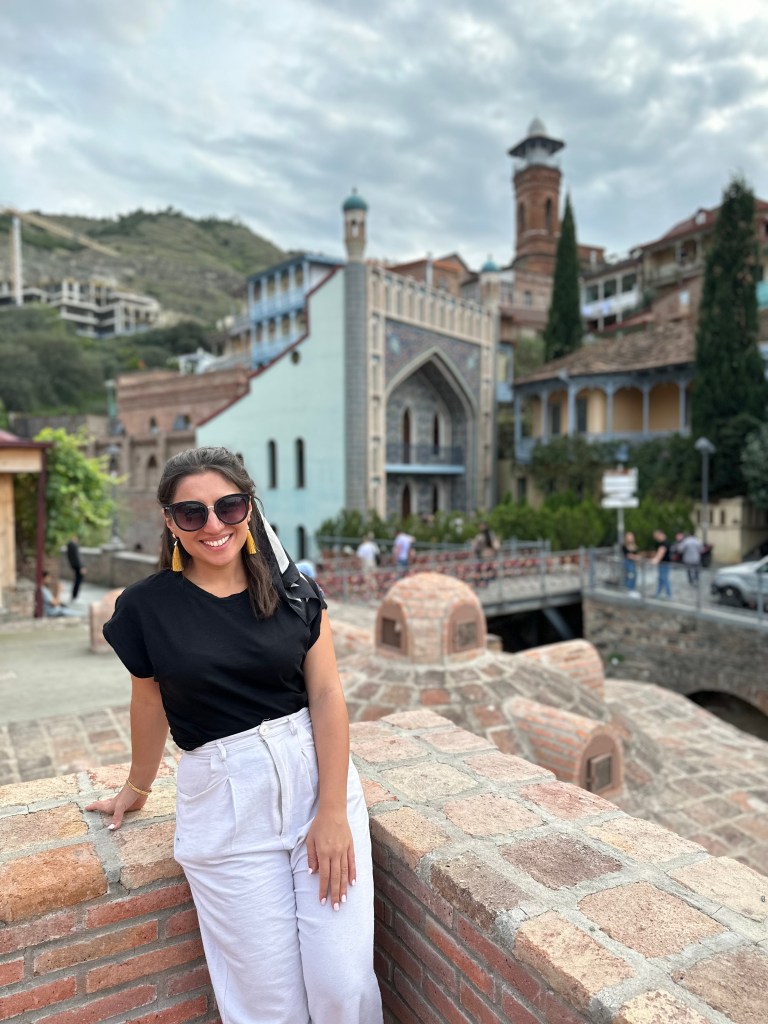
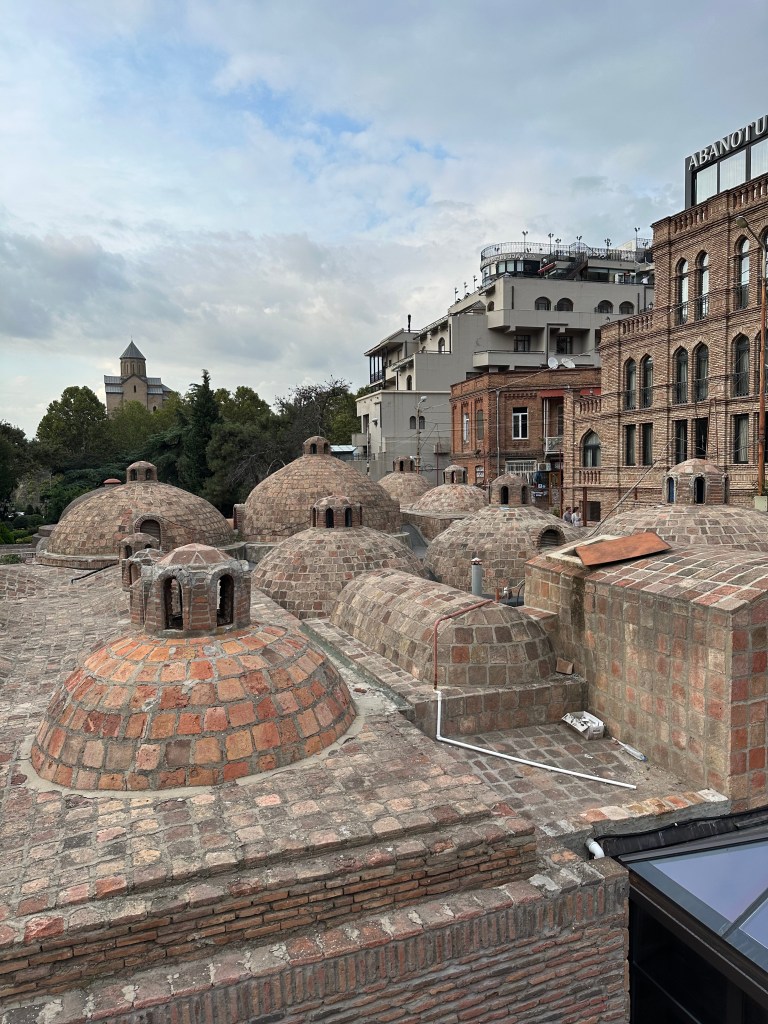
The baths in Abanotubani are instantly recognisable thanks to their iconic brick domes that rise from the ground.
Inside, expect:
- Warm, steamy air
- Marble or stone interiors
- A mix of traditional and slightly worn charm
It’s atmospheric, a little rustic in places, but all part of the experience.
What’s Included in a Private Room
Depending on what you book, rooms can include:
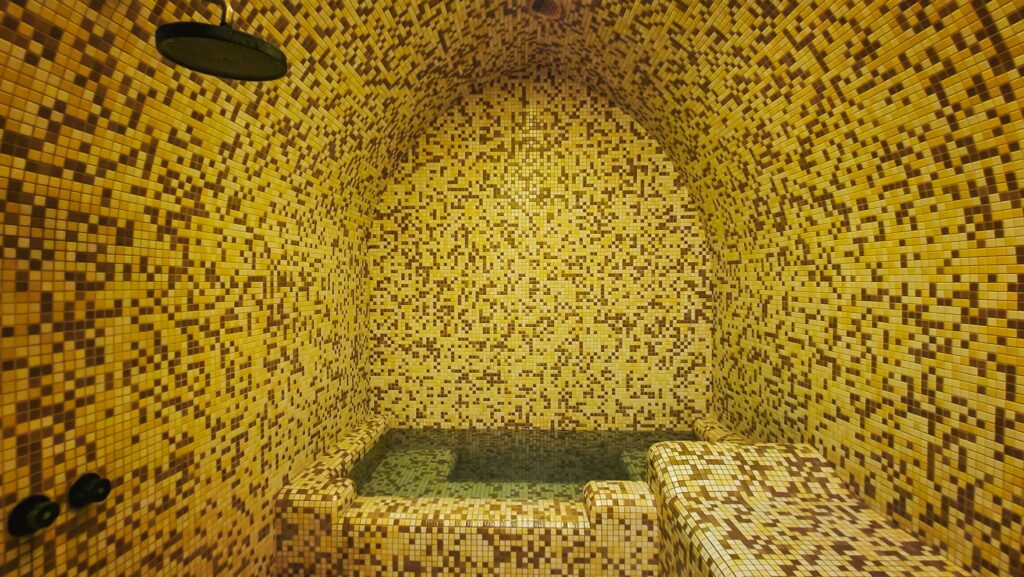
- A hot sulfur pool
- Shower area
- Stone bed for treatments
- Sometimes extras like saunas or cold plunge pools
Prices vary, but smaller rooms are usually the most popular for couples or solo travellers.
The Kisa Scrub (You’ll Want This… Trust Me)
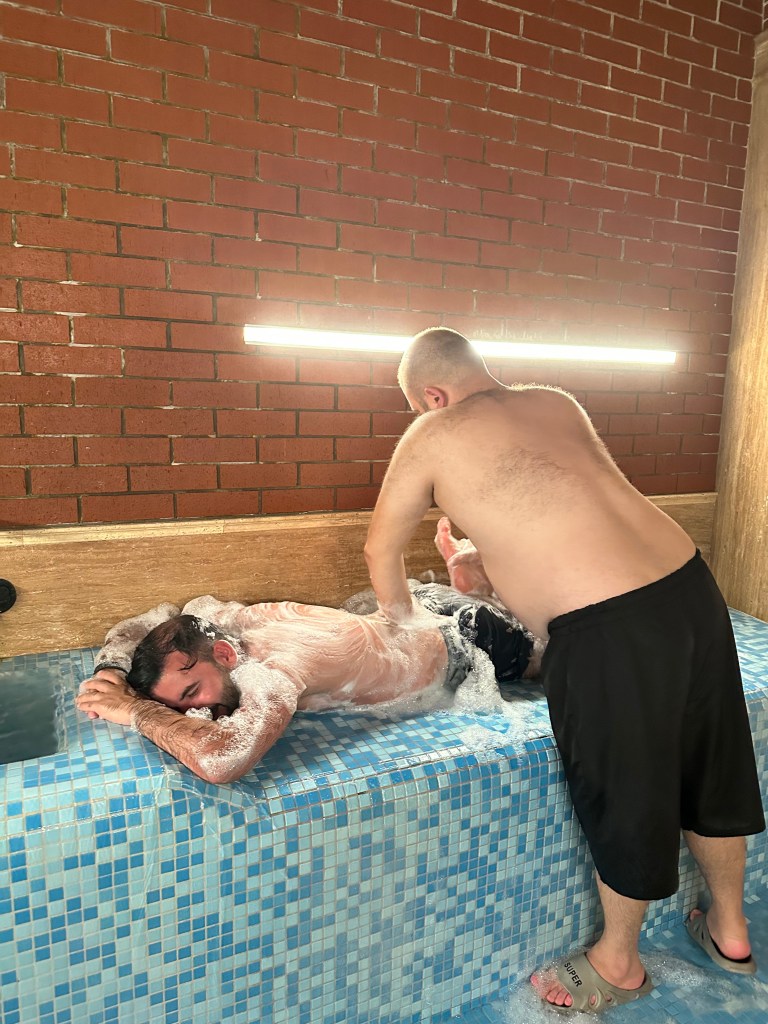
Almost every bathhouse offers a kisa (or kese) scrub, which is an additional treatment performed by a mekise (the person doing the scrub).
It costs around 10–20 lari and is paid in cash – and it’s definitely worth it.
Just be prepared… it’s not exactly gentle.
My Experience at Chreli Abano
Let’s talk about Chreli Abano – also known as the Orbeliani Baths.
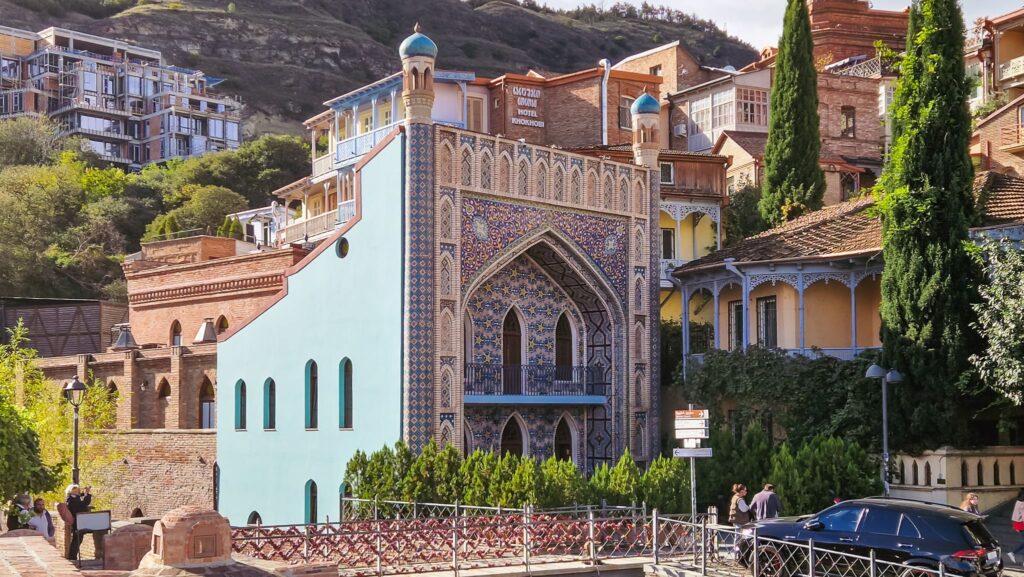
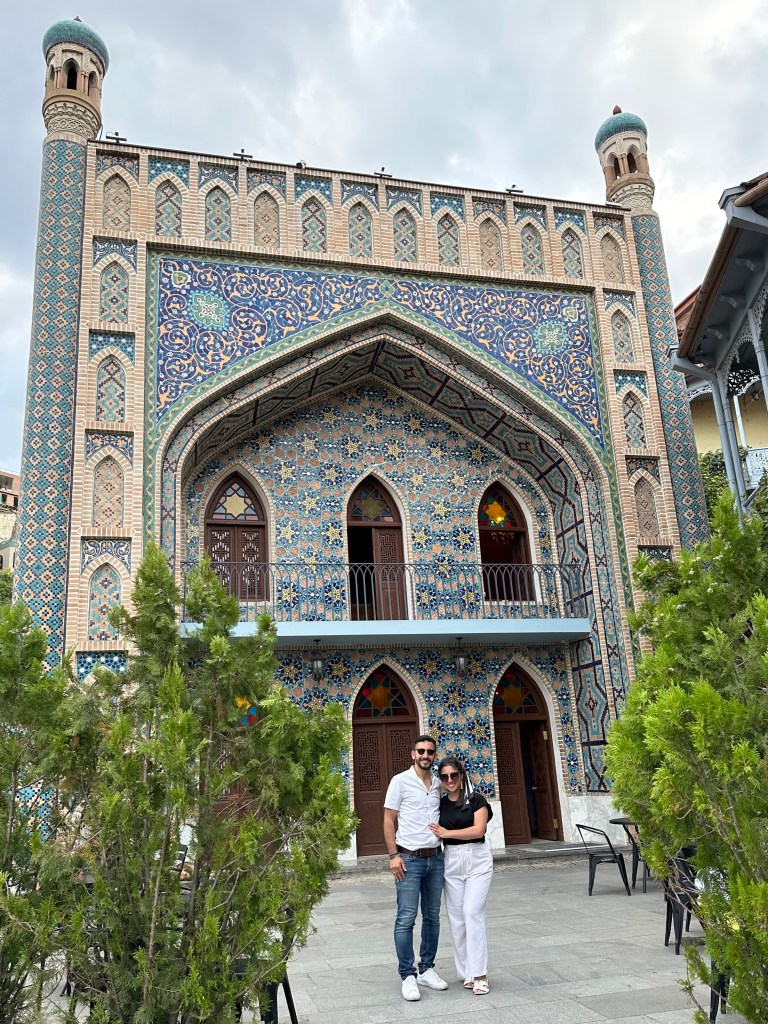
You’ve probably seen it already – it’s the one with the beautiful blue mosaic façade that looks more like a mosque than a bathhouse. It’s right in the heart of Abanotubani and impossible to miss.
It was renovated in 2017, so it feels a bit more polished than some of the older bathhouses, while still keeping its historic charm.
Booking & Cost
I booked my session a couple of days in advance while I was already in Tbilisi, which worked perfectly.
I went for:
- A small private room (for me and my husband)
- One hour session
- Tea
- And, of course, the kisa scrub
The room itself was around 100 lari (though prices now start closer to 130), and with extras, I spent about 150 lari in total.
Honestly? Completely worth it.
The Kisa Scrub: Intense… But So Good
This was easily the highlight of the whole experience.
About 20 minutes into our session, there was a knock on the door, and I was told to lie down on the stone slab.
What followed was… intense 😅
The mekise used a rough scrubbing glove and went all in—removing layers of dead skin I didn’t even know existed. It’s not exactly relaxing in the moment, but weirdly satisfying.
Then came the foam:
- A pillowcase-like cloth filled with soap
- Lots of bubbles
- A full rinse down
By the end, my skin felt unbelievably soft – like completely reset.
Meanwhile, a (very strong-looking) guy came in to do the same for my husband, and let’s just say… he also found it intense 😂
The Overall Experience
After the scrub, I went back into the hot sulfur pool, alternating with cold rinses to cool down.
It’s important because the heat can get a bit overwhelming—and it does lower your blood pressure slightly.
Just as I was fully relaxing into it, the phone rang—our time was almost up.
Stepping back outside into the crisp air after being in that warm, steamy room? Honestly one of the best feelings.
And weirdly… I immediately wanted to go back again.
Practical Tips for Visiting Tbilisi’s Sulfur Baths
If you’re planning to visit, here are a few things that will make your experience smoother:
Book in advance
Popular spots like Chreli Abano fill up quickly.
Go in the evening
It’s the perfect way to unwind after a day of exploring.
Stick to 1 hour
That’s usually enough – 2 hours if you’re in a group.
Bring the basics
Flip flops, towel, and swimwear (especially for the scrub).
Bring cash
You’ll need it for the kisa scrub – usually 10–20 lari.
Leave jewellery behind
Sulfur can damage metals, especially silver.
Know your limits
The heat is intense – take breaks and hydrate.
Is It Worth It?
Absolutely – this is one of those experiences that defines a trip to Tbilisi.
It’s not just about relaxing – it’s about stepping into a tradition that’s been part of the city for centuries.
And whether you love it for the history, the atmosphere, or the slightly chaotic (but amazing) scrub… it’s something you won’t forget anytime soon.


Leave a comment