

Arriving late at night in Lisbon for my first ever solo trip, I had no idea that within hours I’d completely fall in love with the city.
After navigating public transport from the airport to my accommodation in central Lisbon, I stepped out of the station into a lively square glowing under warm streetlights. The tiled pavements shimmered, cafés were still buzzing with life, and there was a relaxed energy in the air that immediately made me feel at home.
It was my first solo adventure abroad, and despite arriving tired and slightly nervous, I felt a huge sense of excitement about what the next day might bring.
The best part? I only had one full day to explore Lisbon.
- Exploring Lisbon in One Day
- Rossio Square and Lisbon’s Historic Heart
- Lisbon’s Most Unusual Shop: The Doll Hospital
- The Santa Justa Lift
- Wandering the Streets of Alfama
- Lunch and Lisbon’s Hilltop Views
- Discovering the Age of Exploration in Belém
- Belém Tower: Lisbon’s Most Iconic Landmark
- The Famous Pastéis de Belém
- Shopping on Rua Augusta
- Dinner with Locals and Bacalhau
- Ending the Day with a Lisbon Pub Crawl
Exploring Lisbon in One Day
The next morning I woke up early and headed down for breakfast. I’m definitely not a morning person, so the last thing I wanted to do at that hour was make conversation with strangers.
Naturally, that’s exactly what happened.
An Australian couple sitting nearby started chatting to me and mentioned they were about to join a free walking tour of Lisbon starting in ten minutes downstairs. Since I didn’t have a fixed itinerary, I decided to join them. Looking back, it was one of the best decisions I made that day.
After gathering a few more travellers along the way, our group made our way to Rossio Square, one of Lisbon’s most historic and lively squares.
Rossio Square and Lisbon’s Historic Heart
Rossio Square has been one of Lisbon’s main gathering places since the Middle Ages, hosting everything from royal celebrations to political revolts.
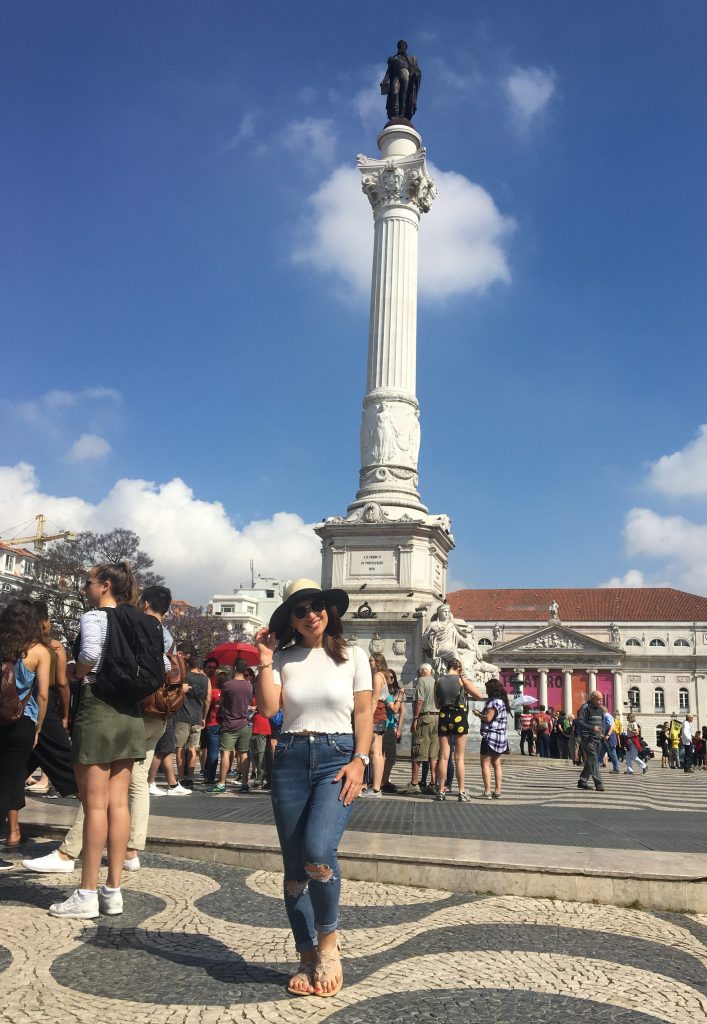
At the centre of the square stands the Column of Pedro IV, honouring Pedro IV of Portugal, who was both King of Portugal and the first Emperor of Brazil.
The monument rises on a tall Corinthian column surrounded by four allegorical statues representing Justice, Wisdom, Strength, and Moderation—qualities associated with the king.
Another beautiful feature of the square is the Baroque-style Mermaid Fountain, which immediately caught my eye. The detailing is incredibly elegant, with the mermaids looking almost lifelike in their expressions and movement. There’s something quite enchanting about it, especially set against the buzz of the square. Unfortunately, even our tour guide didn’t have much information about its history, and I couldn’t find much online either. From what I gathered, the sculptures are made of bronze and were imported from France—but beyond that, it remains a bit of a mystery, which somehow makes it even more intriguing.
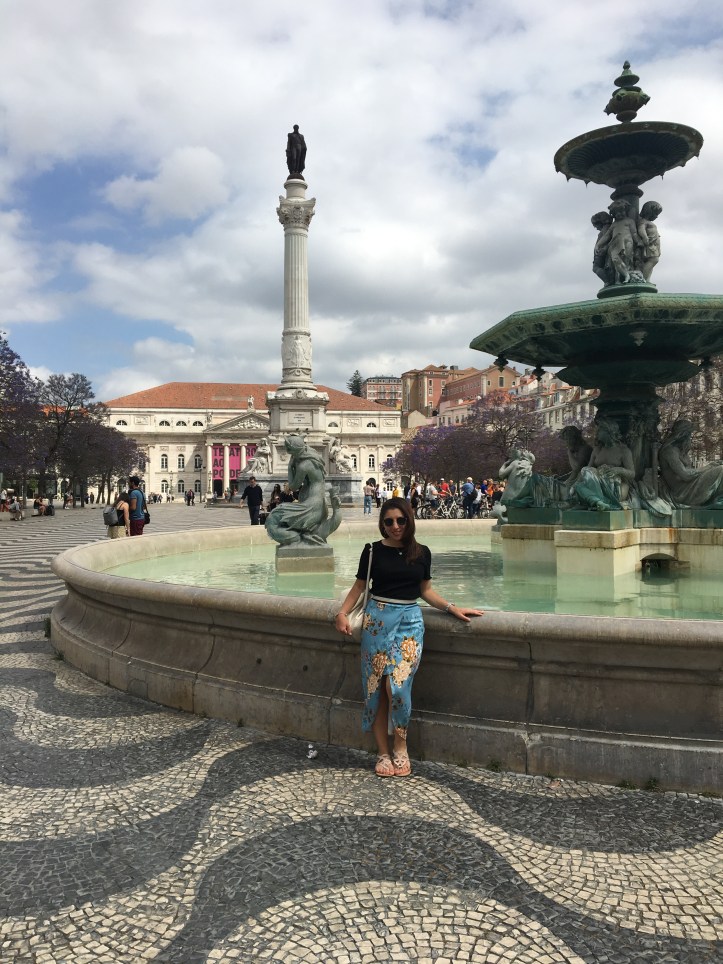
While admiring the square, another traveller named David pointed something out that I hadn’t even noticed: the beautiful black-and-white wave patterns beneath our feet.
The guide explained that this is Portuguese pavement, a traditional mosaic-style street design made from limestone and basalt. The wave patterns give the illusion of movement—almost like the ocean washing through the streets.
You’ll see this distinctive paving throughout Portugal and even in former Portuguese colonies like Rio de Janeiro and Macau.
Lisbon’s Most Unusual Shop: The Doll Hospital
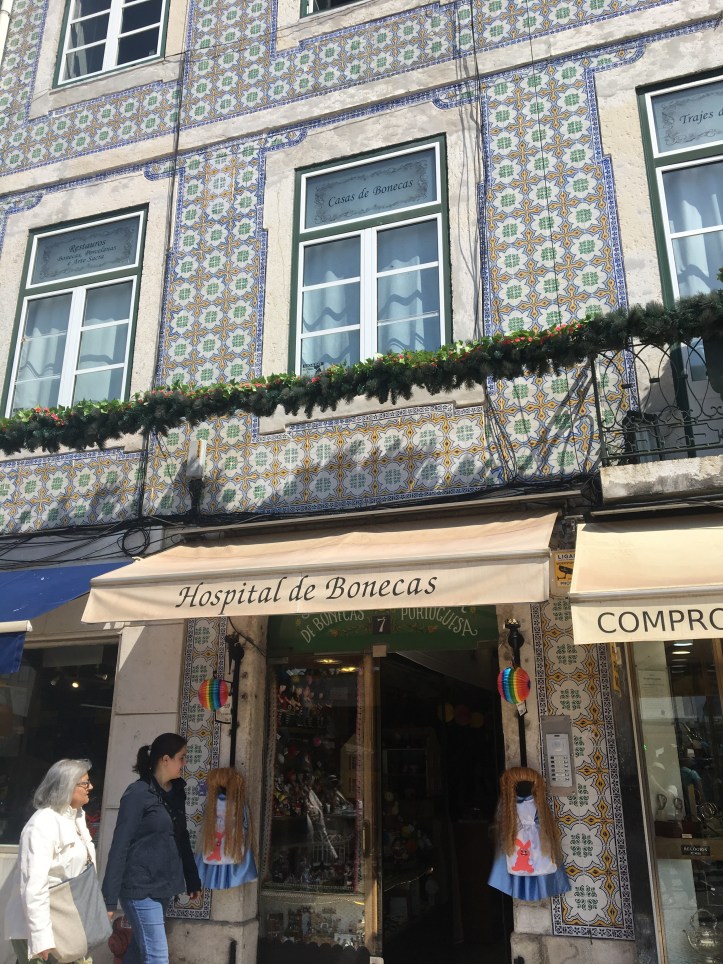
One of the strangest stops on the tour was the Hospital de Bonecas, which literally translates to “The Doll Hospital.”
At first I thought the guide was joking, but it turns out this is a very real institution that has been repairing dolls since 1830.
Inside are thousands of dolls waiting for treatment—some missing limbs, others needing new eyes or hair. There are shelves filled with spare parts and even an “operating table” where the dolls are restored.
The shop even has a small ambulance basket used to transport the most serious cases into the workshop.
It was fascinating, slightly creepy, and completely unforgettable.
The Santa Justa Lift
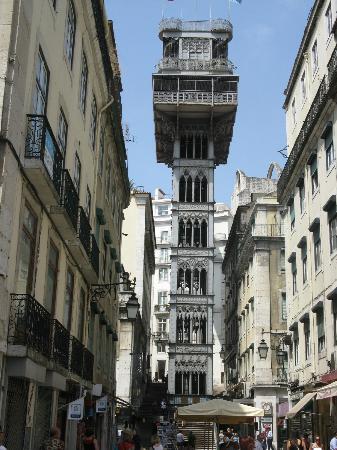
Next we walked past the famous Santa Justa Lift, a striking Neo-Gothic iron elevator connecting the lower streets of Lisbon with the higher neighbourhoods.
Built in 1902, the lift was designed by engineer Raoul Mesnier du Ponsard, a student of Gustave Eiffel.
Although the structure is impressive, our tour guide jokingly described it as a tourist trap, so we admired it from a distance rather than queueing to ride it.
We then slowed the pace and wandered more intimately through the neighbourhood, zigzagging down narrow streets until we reached the charming alleyway of Escadinhas de São Cristóvão, which leads down to Rua da Madalena.
Here, the walls are a beautiful mix of aged azulejo tiles and vibrant street art. When the traditional ceramics give way, colourful graffiti takes over—many pieces paying tribute to Fado, the soulful and melancholic music that was born in Lisbon. The whole alley feels like a living canvas, celebrating the neighbourhood’s deep cultural roots and artistic spirit.

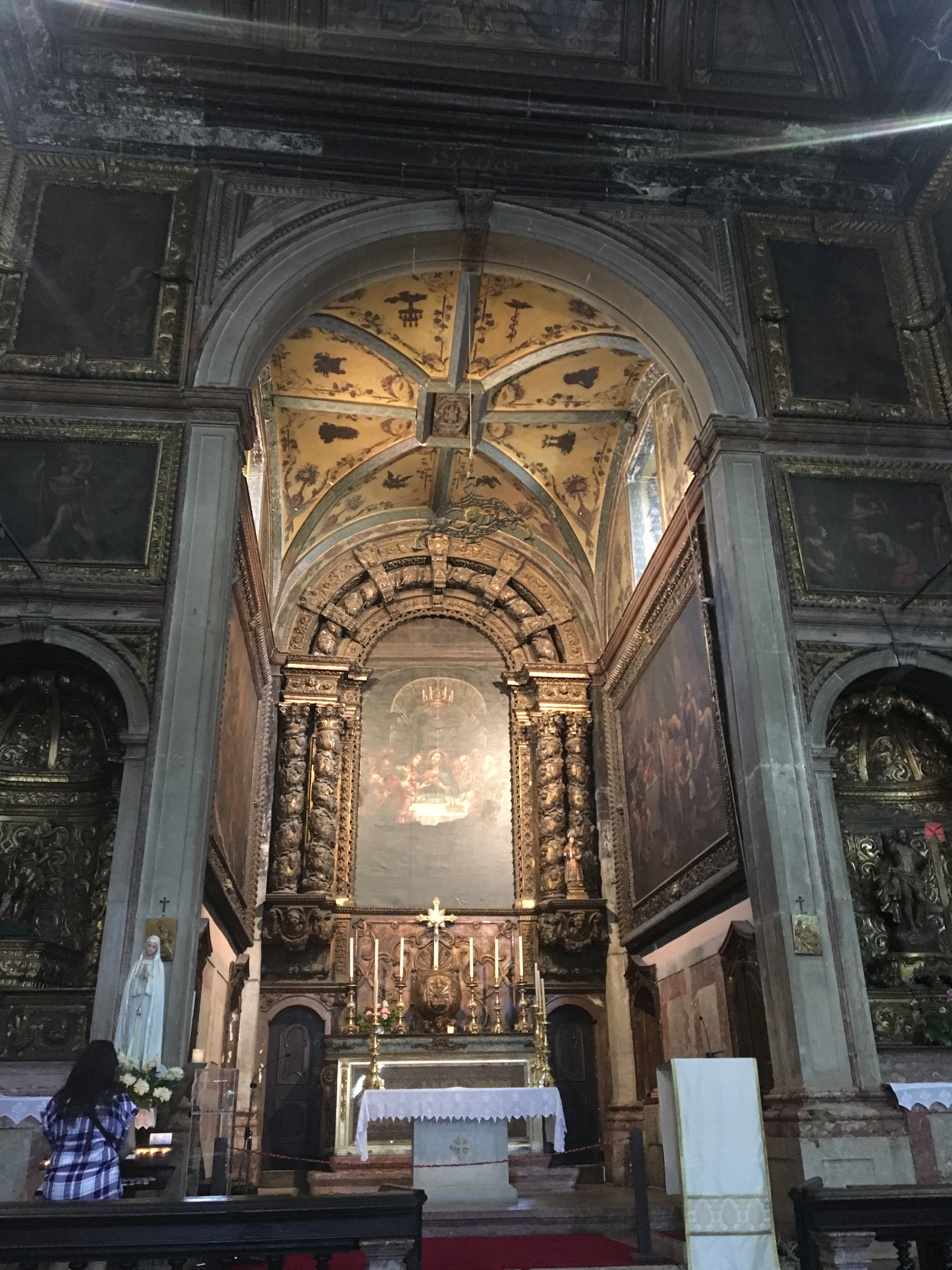
Just a stone’s throw away, we stumbled upon a charming little square tucked quietly in front of the Church of São Cristóvão e São Lourenço. It felt almost hidden from the busy streets, with a calm, almost enchanted atmosphere that made it the perfect spot to pause for a moment and take it all in.
Wandering the Streets of Alfama
Soon the tour led us through narrow alleyways toward the historic Alfama District, Lisbon’s oldest neighbourhood.
Unlike many parts of the city, Alfama survived the devastating 1755 Lisbon earthquake, which destroyed much of Lisbon.
As a result, the district still has its original maze of narrow streets, steep staircases, and medieval architecture.
One particularly charming alley we passed was Escadinhas de São Cristóvão, famous for its colourful street art celebrating Fado, the soulful Portuguese music style known for its melancholic melodies.
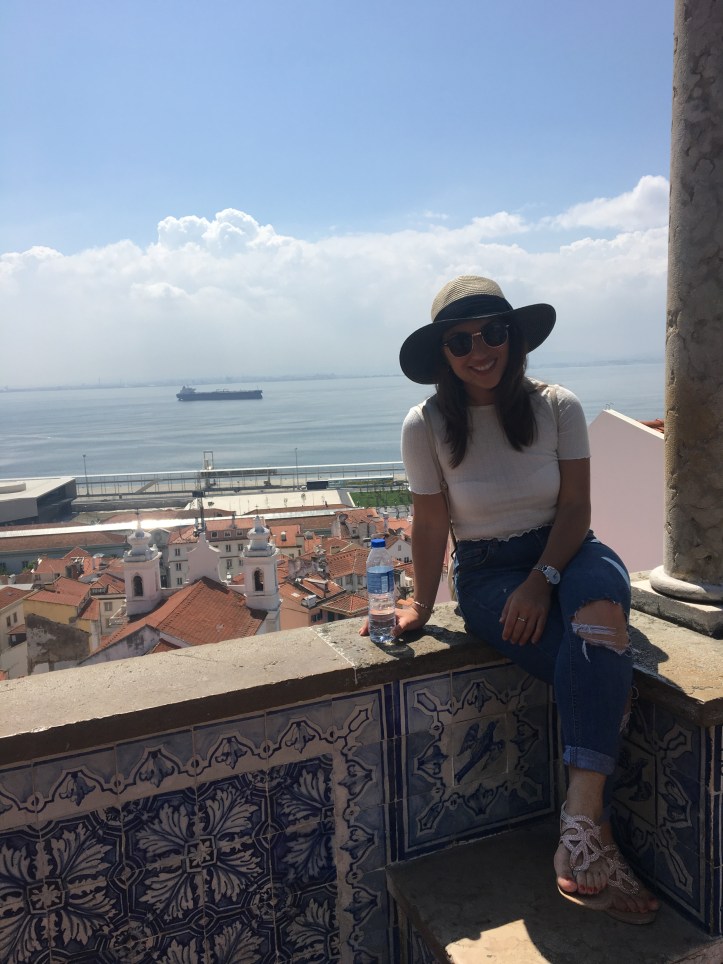
Nearby we stopped at Miradouro de Santa Luzia, a romantic terrace decorated with azulejo tiles and flowers.
From here we had breathtaking views over Lisbon’s red rooftops, the winding streets of Alfama, and the shimmering waters of the Tagus River.
Lunch and Lisbon’s Hilltop Views
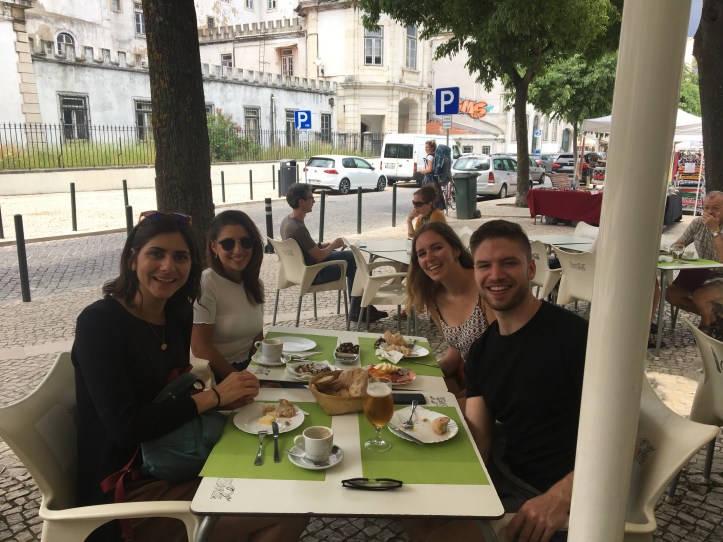
After the tour, a few of us—David and two travellers named Joanne and Miriam—decided to break away and grab lunch together.
We found a small restaurant and shared octopus salad and tapas, while I treated myself to a much-needed latte.
Travel conversations flowed easily as we swapped stories about our journeys, favourite cities, and future destinations. It was one of those spontaneous travel moments that make solo trips so special.
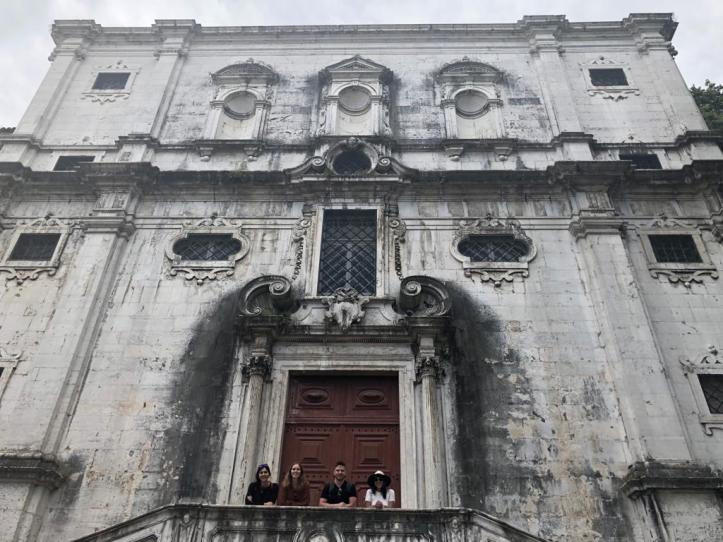
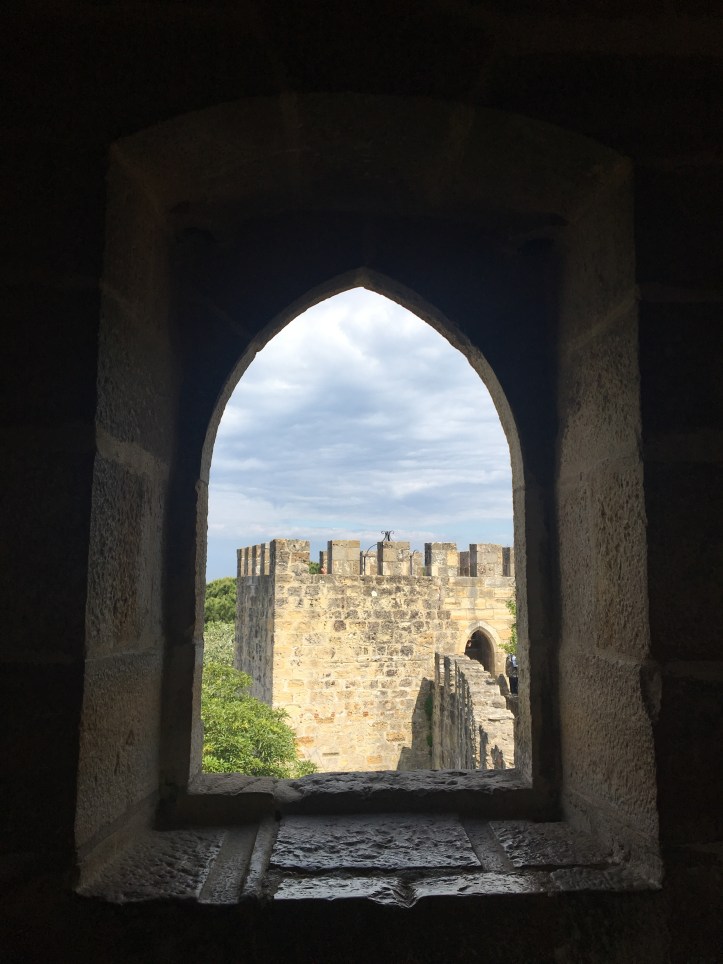
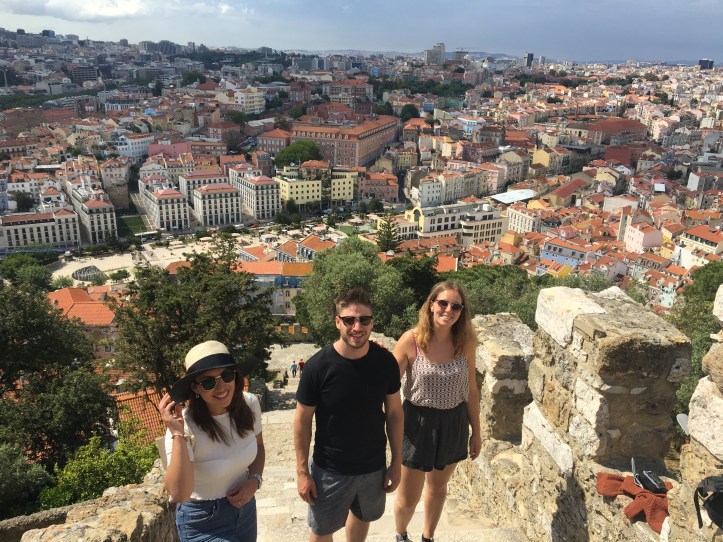
After lunch we climbed up to São Jorge Castle, a medieval fortress perched on Lisbon’s highest hill. Originally built by the Moors in the 11th century, the castle later became a royal palace after Portugal was reconquered by Christian forces in 1147.

Belem district
Discovering the Age of Exploration in Belém
Later in the afternoon we took an Uber to the historic Belém District, an area closely connected with Portugal’s Age of Discovery.
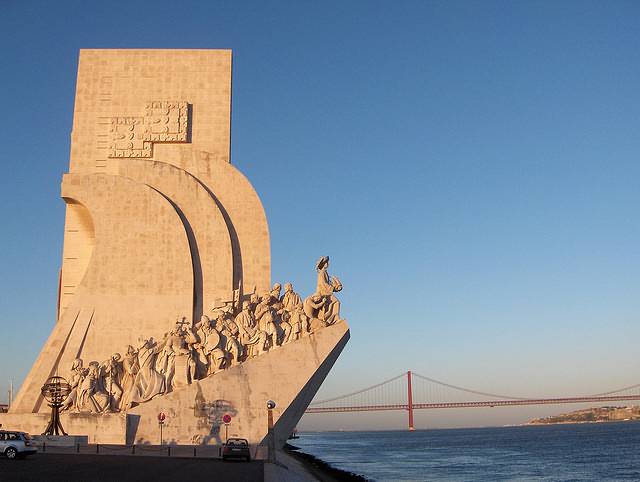
Our first stop was the striking Monument to the Discoveries, a 50-metre monument shaped like the prow of a ship.
The monument honours Portugal’s great explorers, including:
- Henry the Navigator
- Vasco da Gama
- Pedro Álvares Cabral
- Ferdinand Magellan
Standing there overlooking the river, it was easy to imagine the ships setting sail from Lisbon toward unknown parts of the world.
Belém Tower: Lisbon’s Most Iconic Landmark
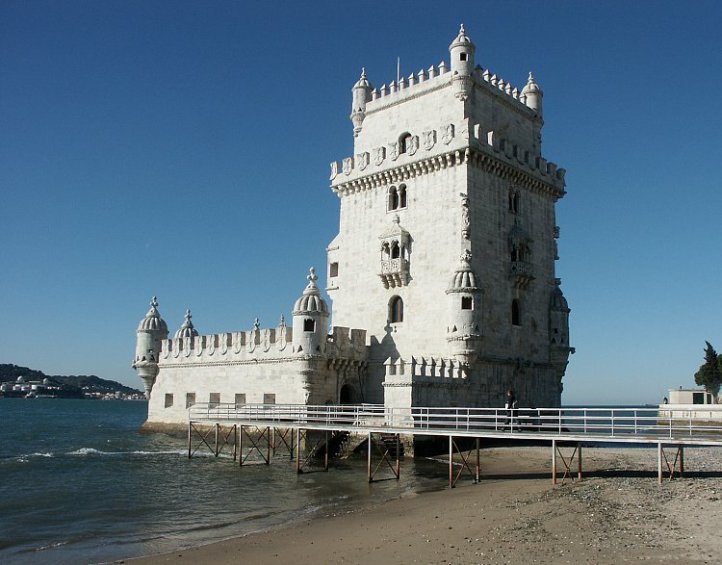
A short walk along the river brought us to Belém Tower, one of the most iconic landmarks in Portugal.
Built in 1514, the tower originally served as a fortress protecting Lisbon’s harbour and as a ceremonial gateway for ships arriving in the city.
We sat on the grass nearby for a while, relaxing and chatting. For some reason, the conversation turned into a surprisingly intense debate about Brexit – not exactly what I expected while admiring a 16th-century fortress in Portugal.

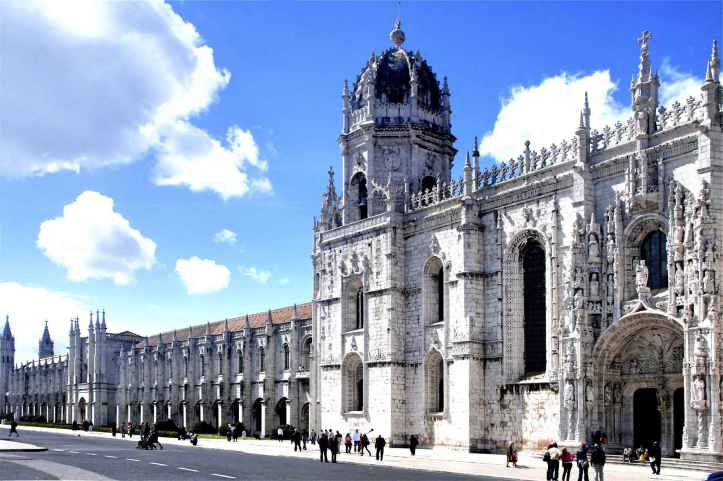
At this point, I left the group, as I wanted to catch the tram back to Rua Augusta – the city’s longest pedestrianized street to do some shopping! On my way back to the tram, I walked past the extravagant Jeronimos Monastery. After visiting this, you’d understand why the affluent and elite used to hang out in Belem to escape life in the city (aka. the poor people). I believe the monastery later became home of an orphanage before being turned into a museum. It really is a very beautiful former monastery.
The Famous Pastéis de Belém
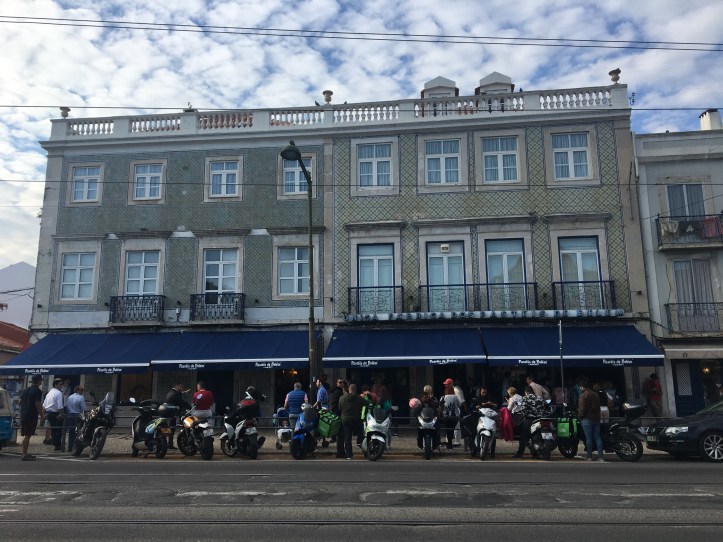
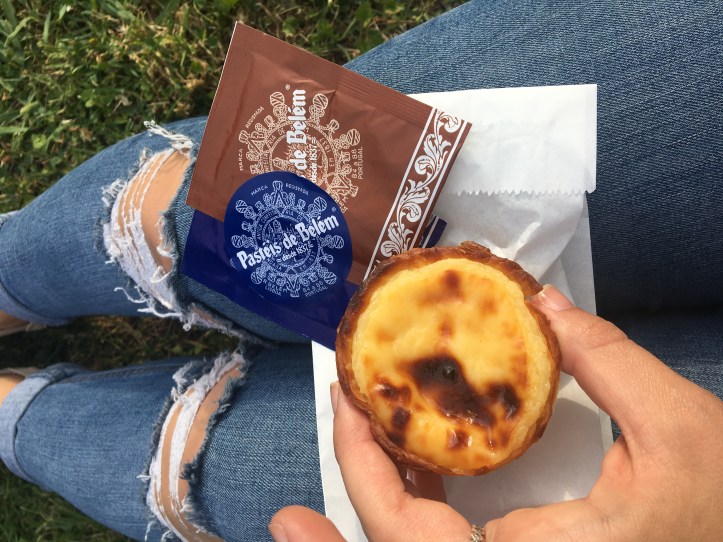
Before leaving the district, I stopped at the legendary Pastéis de Belém, famous for its delicious Pastel de Nata.
These iconic custard tarts were first created by monks at the nearby Jerónimos Monastery in the 18th century.
When religious orders were dissolved during the Liberal Revolution of 1820, the recipe was sold to a bakery, which still produces the pastries today.
I bought a few tarts to take home—and ate one immediately in the park nearby because the smell was simply impossible to resist.
Shopping on Rua Augusta
Back in the city centre, I explored Rua Augusta, Lisbon’s lively pedestrian shopping street.
The avenue stretches from Praça dos Restauradores to the magnificent Praça do Comércio, and is filled with shops, cafés, and street performers.
Dinner with Locals and Bacalhau
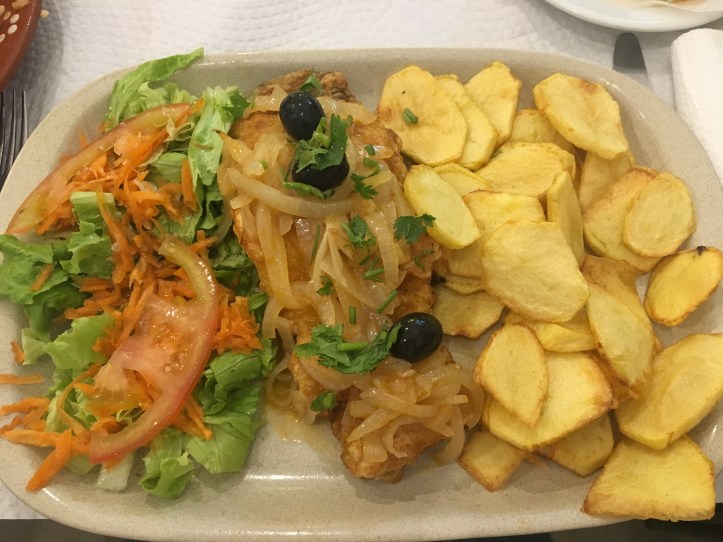
Later that evening I went in search of Bacalhau, Portugal’s national dish.
A friendly shop assistant recommended a small local restaurant called Mimosa de Camões.
When I arrived, there was a staff party taking place. I was about to head off before the waitress came out and told me that I’m more than welcome to sit on the single table at the side of the restaurant. I told her that I would’ve loved to but I don’t think I’d be comfortable sitting on my own with the staff party right behind me. She basically dragged me back in and said that in Portugal, no one cares about that. A few people noticed me looking a bit lost, and asked me to join them on the table – which I did. It was rather out of character of me as I’m a typical Londoner who wouldn’t usually mingle with strangers – but It was actually a really liberating experience.
Soon I found myself sharing a table with locals, chatting about Portuguese culture and food.
They explained how bacalhau (dried, salted cod) became popular during Portugal’s seafaring era, when salted cod was preserved for long voyages across the Atlantic.The people I was sitting with told me that Bacalhau is actually caught in much colder waters near Norway, Iceland and Canada. They also told me that the popularity among the Portuguese dates back to before the Age of Discoveries (15th – 18th centuries) when sailors traveled all over the world, relying on fish as a food source. The Portuguese locals were very friendly and invited me to the local pub to watch some football with them. I politely declined the offer and made my way back.
Ending the Day with a Lisbon Pub Crawl
Just as I was about to go to sleep, David from the walking tour called and invited me to join a pub crawl.
Within fifteen minutes I had showered, changed, and rushed out to meet them in the square.
We spent the rest of the evening exploring Lisbon’s nightlife, dancing, laughing, and sharing stories with travellers from around the world.
It was the perfect ending to my first day in Lisbon—a city that had completely captured my heart.
 Where May Wanders Travel Blog
Leave a comment